
Cross 11
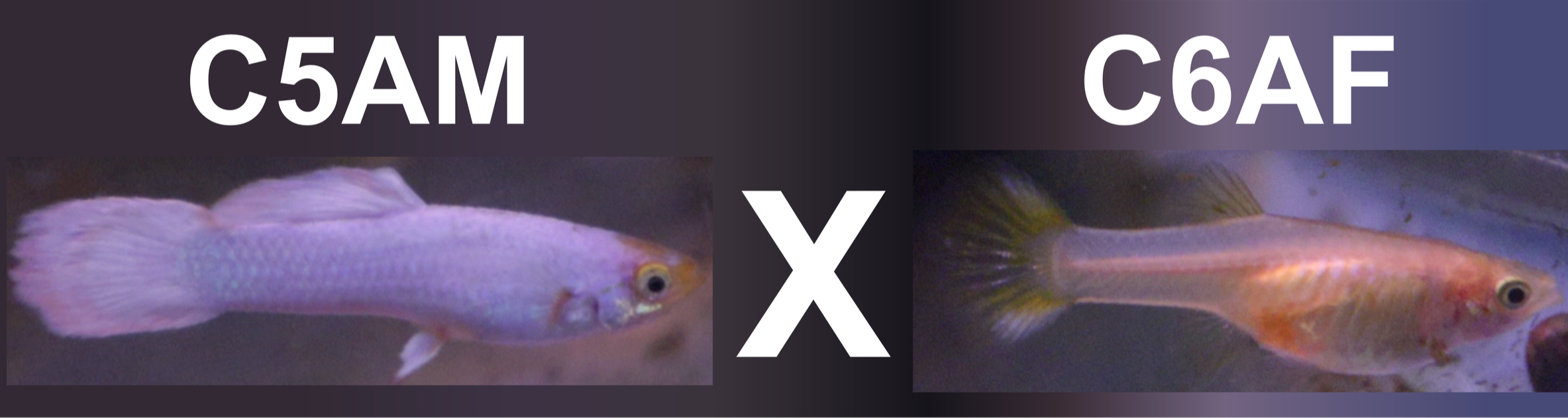
Purpose: The first of the intercross phase where I am crossing the separate lines that have formed from the individual backcrosses. This cross is intended to try and stabilize the snow white phenotype using a male and female that both seem to express snow white. This pair was introduced to each other on June 23rd, 2024.
Male (C5AM):
Gandalf’s son/grandson from Cross 5.
Strain: Technically 3/4 Snow White but phenotypically full Snow White
Relevant genes. Some are assumptions, indicated with italics. Although their decedents strongly support the claims:
Base body color: Blond (bb)
Magenta: likely homozygous (MM)
European Blau: (rr)
Stoerzbach: (ss)
Female (C6AF):
Gandalf’s daughters/granddaughters from Cross 6 (I used three total females).
Strain: 3/4 Snow-White
Relevant genes. Some are assumptions, indicated with italics. Although their decedents strongly support the claims:
Base body color: Blond (bb)
Magenta: likely homozygous (MM)
European Blau: (rr)
Stoerzbach: (ss)
Offspring:
Born: July 17, August 13, August 26, September 9, September 23, Lost track of exact dates but October and November.
Brood Size: 45
20 Male
25 Female
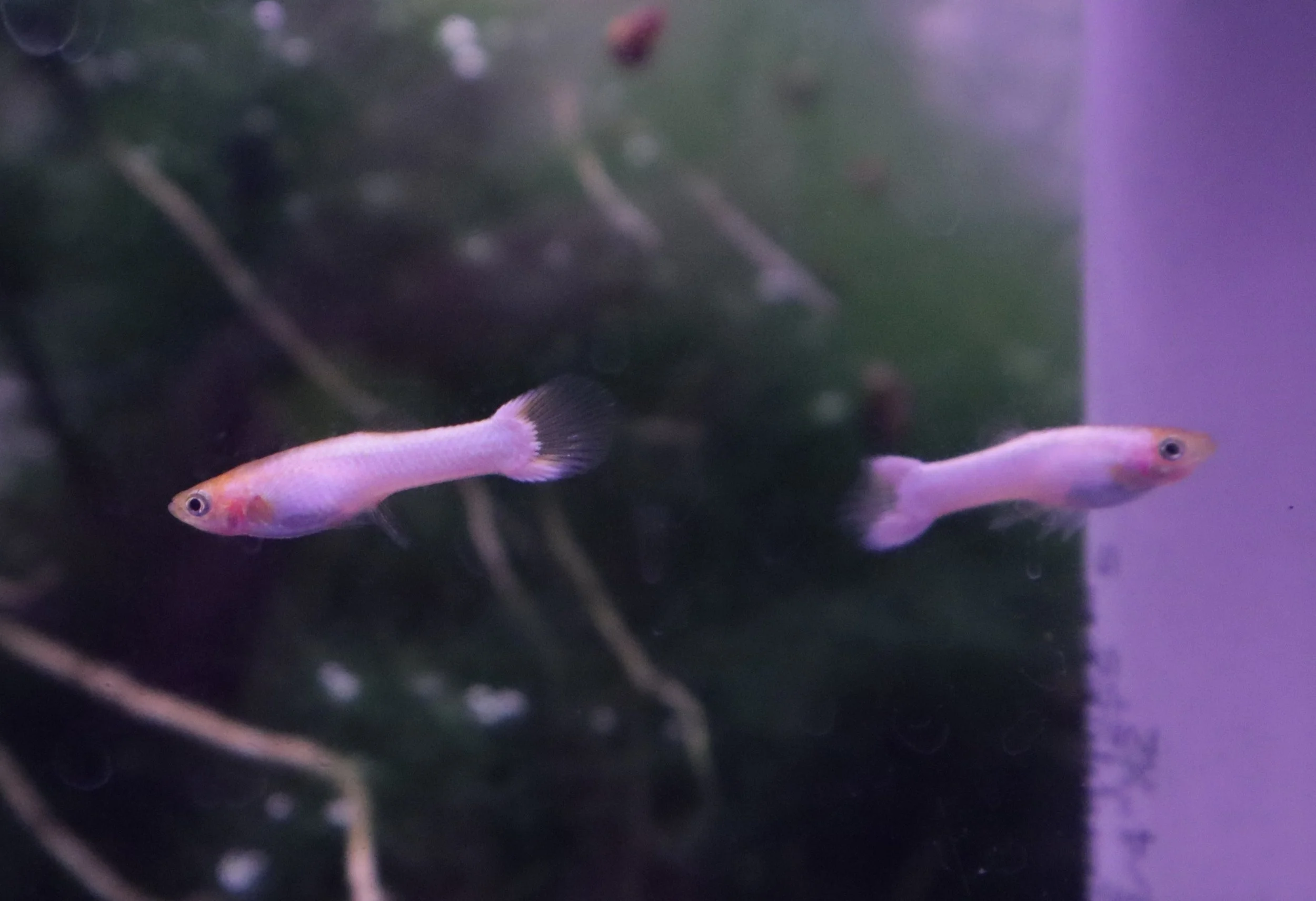
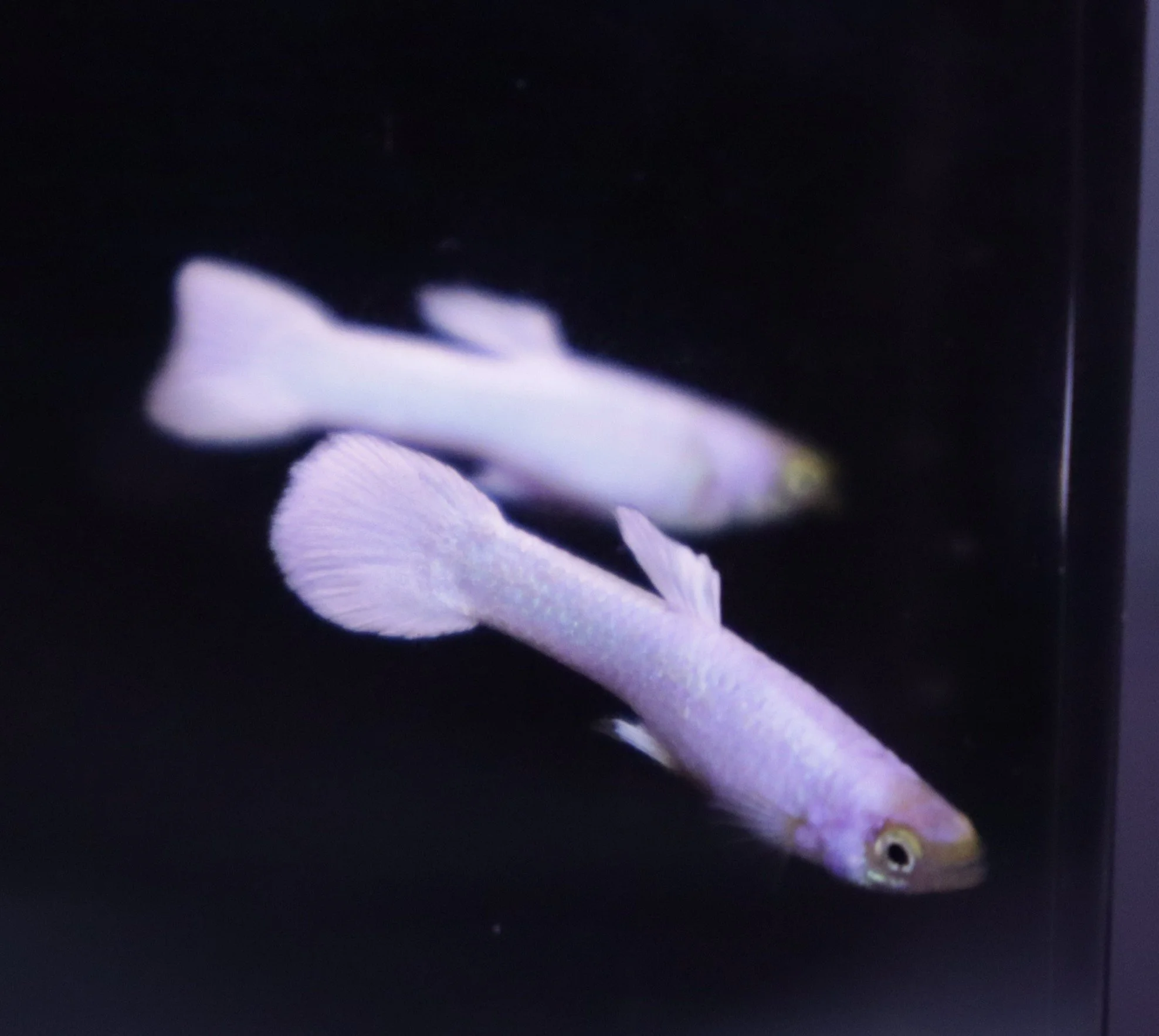
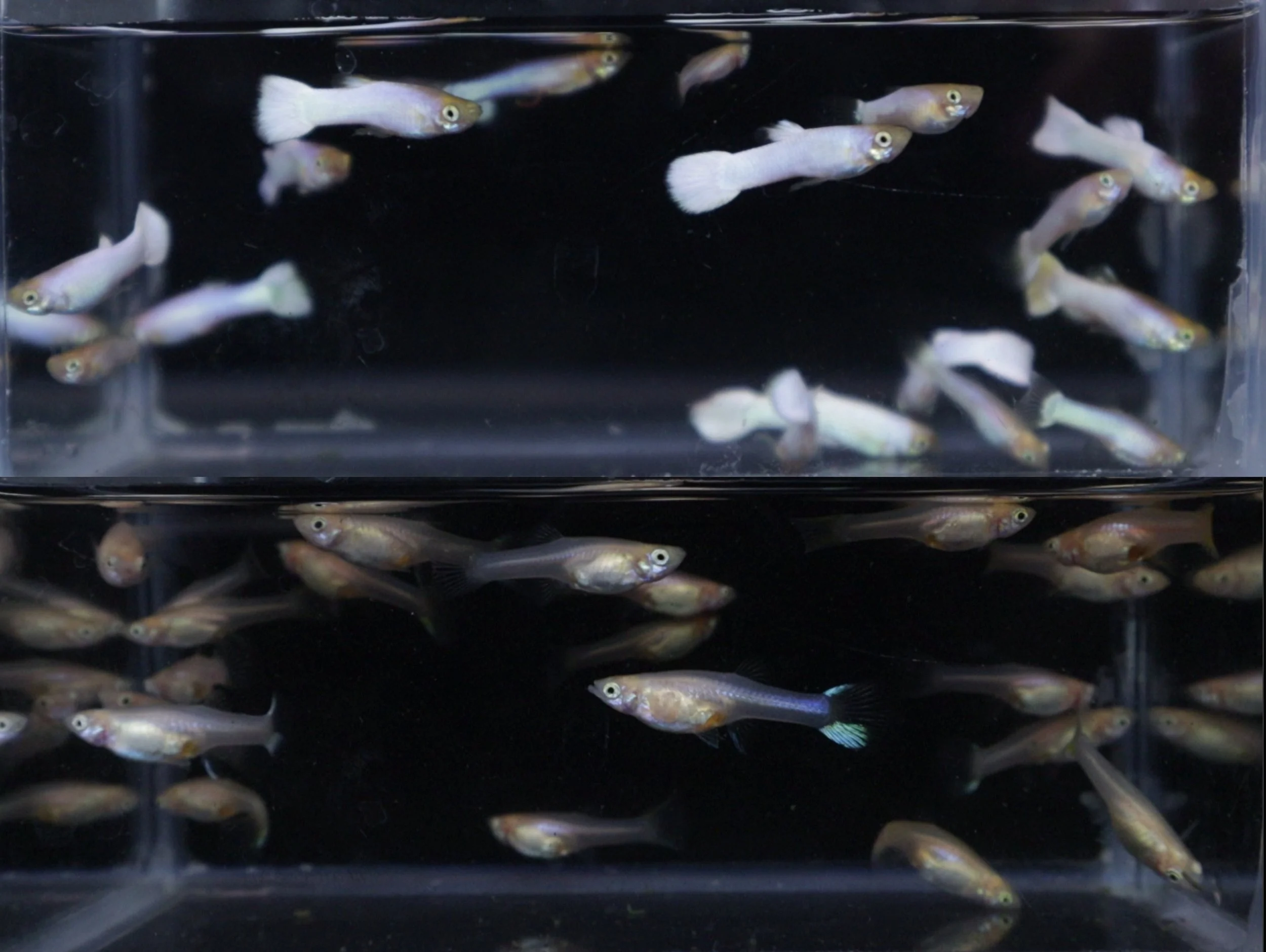
Offspring phenotypes and genotypes:
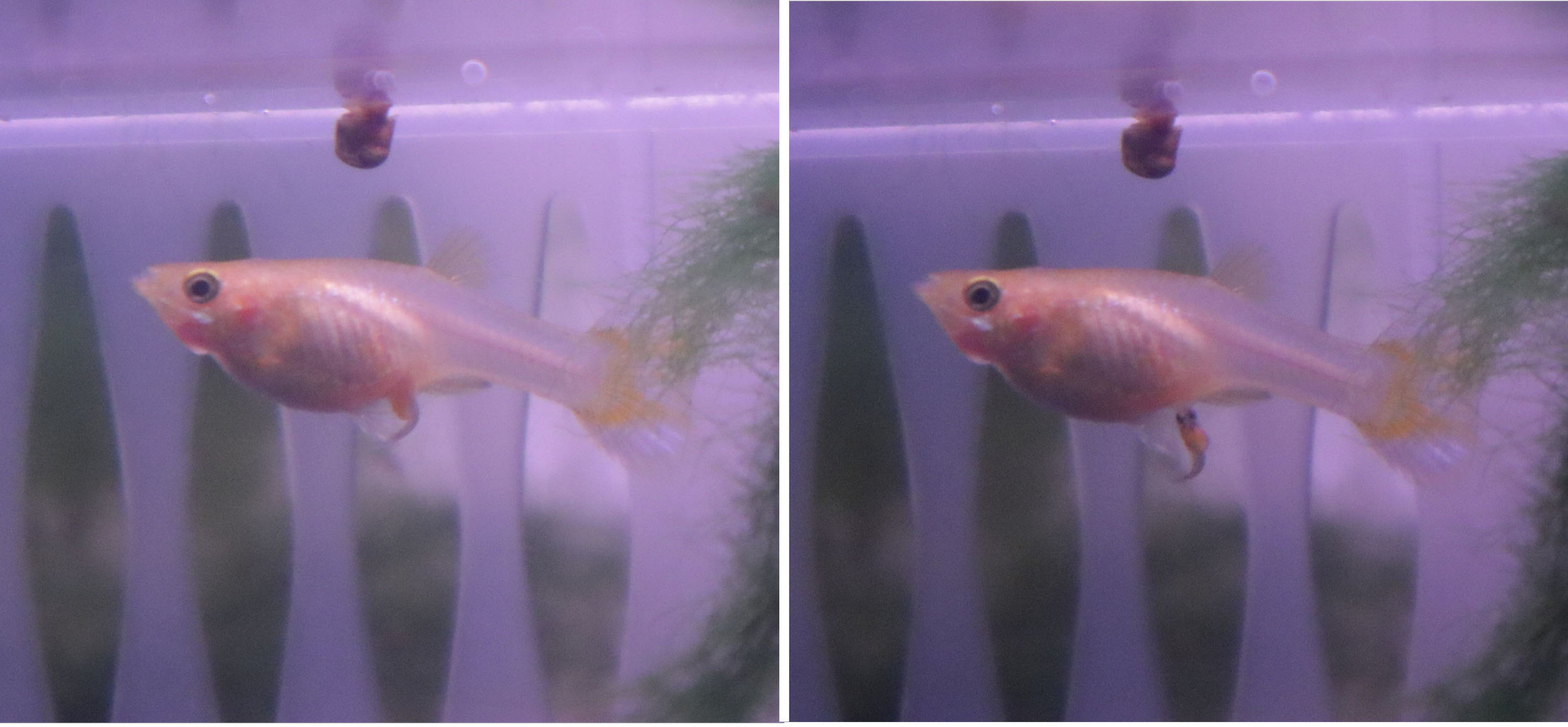
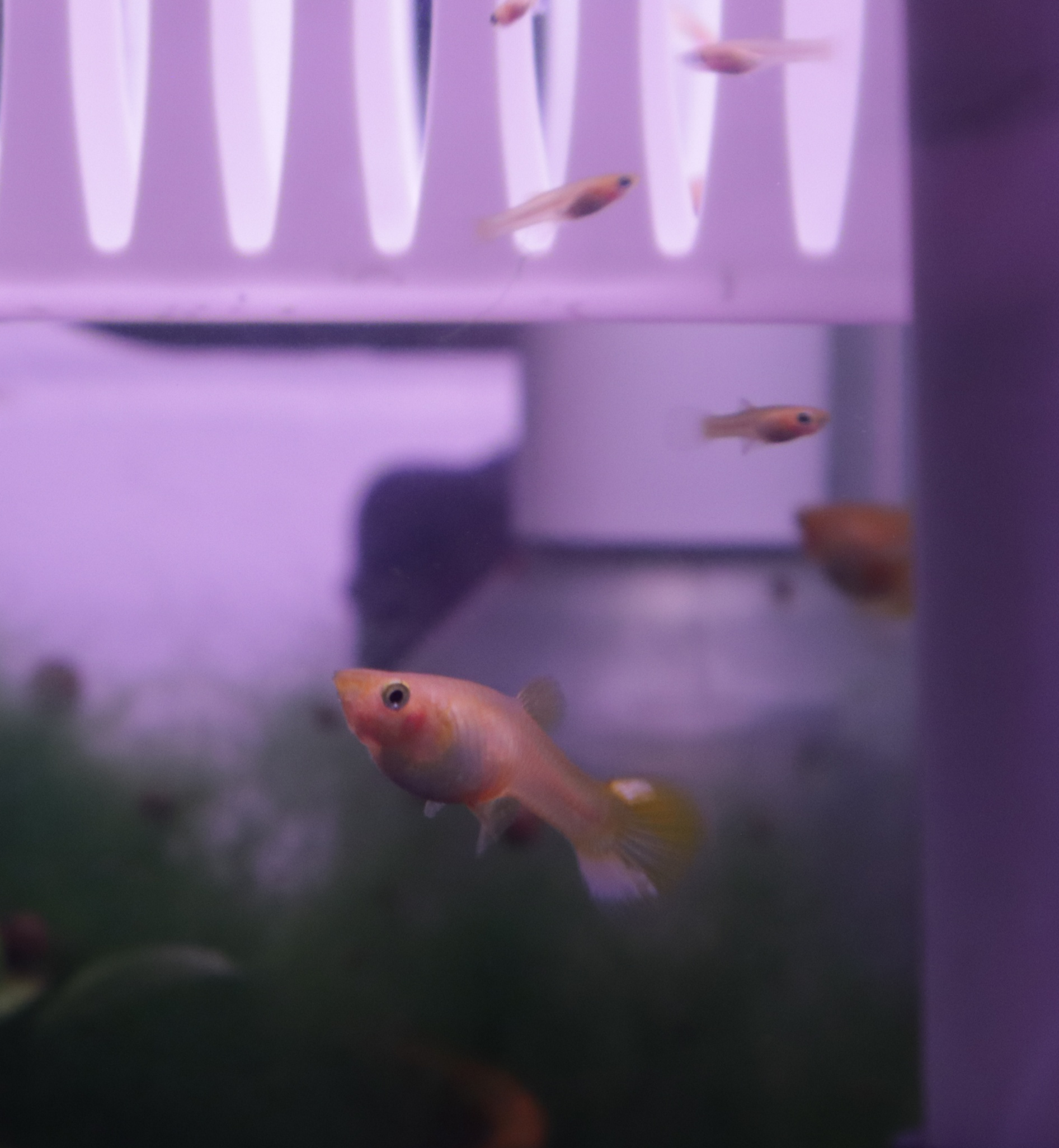
The offspring were surprisingly uniform, displaying a very consistent Snow White phenotype. As seen in the figure above, there is remarkably little variation between siblings. This suggests that the three C6A females used for this cross were likely genotypically identical, which was a fortunate outcome for the stability of this line.
While I typically find Stoerzbach difficult to identify, I discovered that high-intensity lighting—originally intended for photos and videos—reveals the characteristic body iridescence of the gene. By viewing the fish at specific angles, I could identify Stoerzbach expression even in the females; the female at the center of the image above is a perfect example.
Genotype distributions.
All likely bb|MM (or Mm)|rr|ss
A Note on Magenta (M): I suspect these offspring are primarily homozygous for Magenta (MM). My current observation is that heterozygous (Mm) expression does not reduce fin size as significantly as the homozygous state. Since nearly all individuals in this brood exhibited shorter tails, it points toward a homozygous (MM) population. However, more rigorous data collection is needed to confirm this correlation precisely.
While the majority of the brood was remarkably uniform, there were a few outliers with phenotypes I haven’t yet explored in depth. For example, consider the yellow-hued male pictured below; he was the only individual in the entire brood to exhibit this specific coloration. This phenotype is reminiscent of some of his uncles from Cross 5, though with significantly more iridescence—likely a result of the Stoerzbach gene.
Another male in the brood appeared closer to the Snow White phenotype than his yellow brother, yet his colors seemed "washed out" compared to his full Snow White siblings. I am uncertain of the exact cause, but I suspect it may be due to polygenic traits (minor modifier genes) affecting the overall color intensity. While I am hesitant to conclude that he lacks Stoerzbach, he clearly exhibits less iridescence on his flanks. Interestingly, his topside iridescence is more pronounced than the yellow brother's, but it remains significantly less intense than that of the full Snow White males.
I have included a full Snow White brother in the figure below to provide a visual contrast between partial and full iridescent coverage.

I have concluded that the high iridescence coverage on the males' topsides is likely an independent trait, rather than an effect of the Stoerzbach gene. Although I previously selected for it as if it were part of Stoerzbach, I now believe they are separate genetic factors. Regardless, I will continue selecting for this coverage whenever possible.
The majority of this brood expresses the highly iridescent topside. Out of the ten oldest males, only two lacked this trait, showing iridescence levels more similar to the "washed out" male pictured in the middle of the figure above.
The females were phenotypically uniform; however, none of them exhibited the intense topside iridescence seen in the males.
Notes:
So far, this is the closest cross I’ve had to breeding true for the snow white phenotype.
All offspring in this brood are likely homozygous for magenta (MM). Magenta is thought to reduce fin size. I believe this largely occurs in its homozygous state, which aligns with its incomplete dominance. This brood had only short-finned males. However, without precise data, a proper distribution analysis isn't possible at this time.
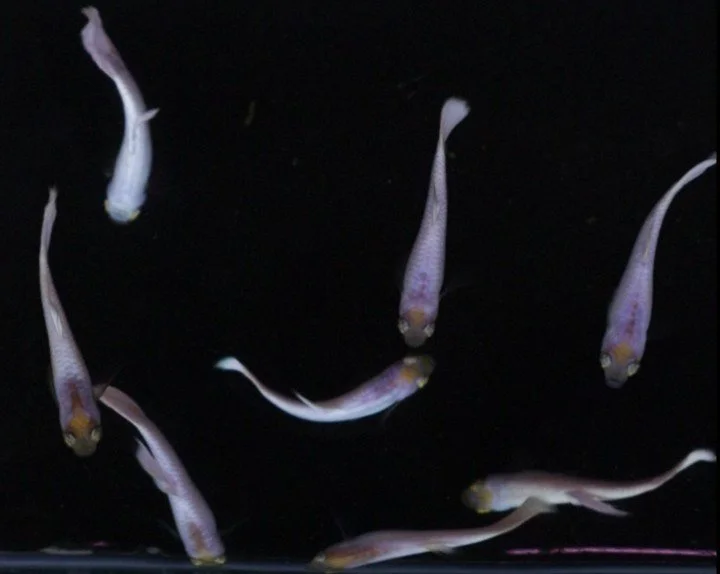
In preparation for a cross with Halfblack Red Rose Tails—a strain with very interesting fin branching—I used macro photography to examine the rays of these Snow Whites. From these images, it appears the longest rays undergo two levels of bifurcation (maaaaybe three). The earliest branching seems to occur on rays 6 or 7, providing a baseline for comparing how these traits might merge in a hybrid cross.
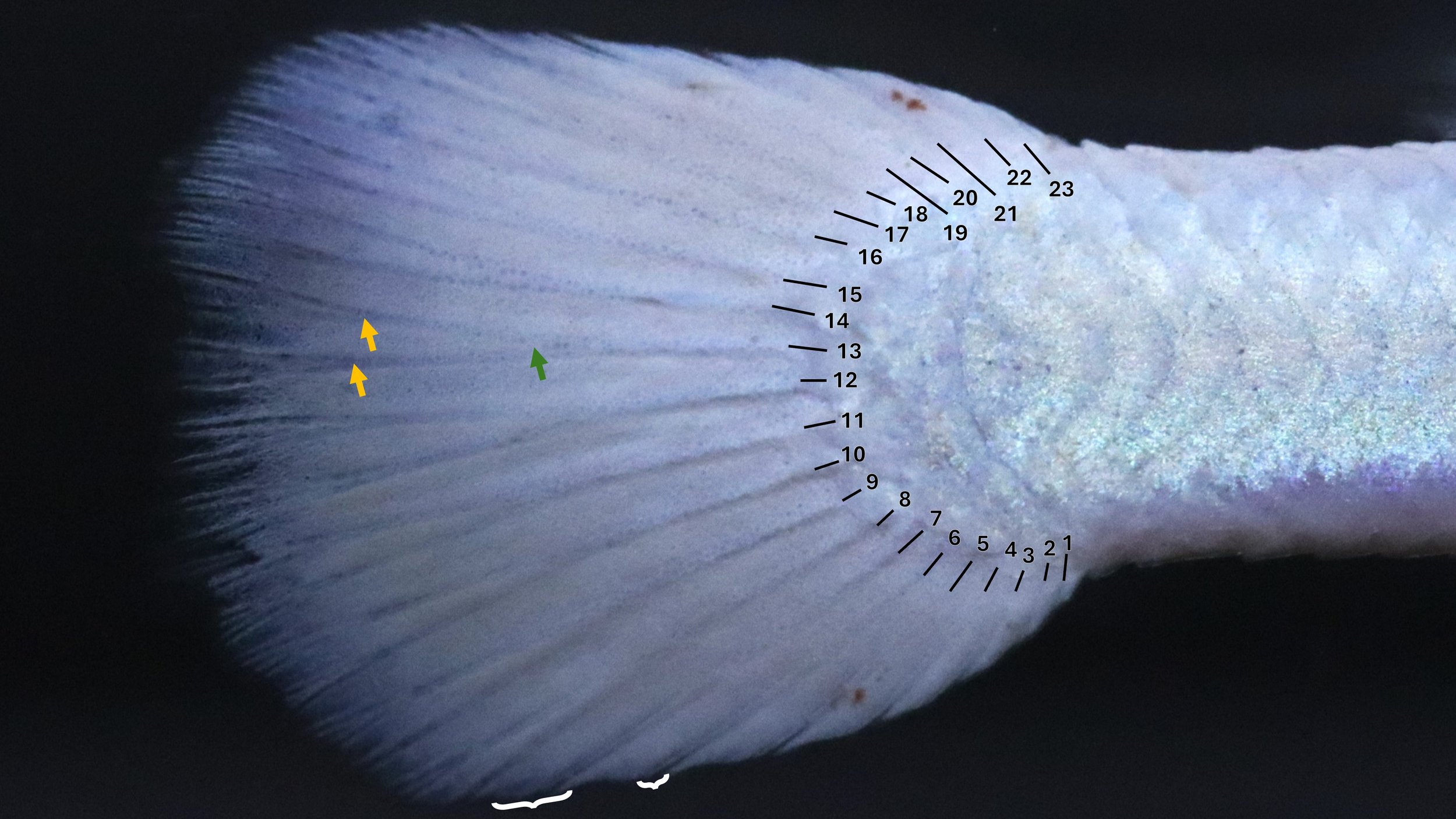
I selected a total of three males as my next breeders for upcoming crosses. Two of these were used for the same cross
The first two males were used in the first cross to a halfblack red rose strain to establish Cross 19. These males were labeled as Cross 11 Males A (C11AM).
The last male was paired with a female from Cross 13 to establish Cross 18. This male was labeled as Cross 11 Male B (C11BM).
I selected several females as breeders for additional crosses to both stabilize the snow white line, integrate an iridescent forehead trait and cross into the halfblack red rose strain.
The first set of females was paired with a male from Cross 8 (Thorn) to establish Cross 15. These females were labeled as Cross 11 Females A (C11AF).
The next female was paired with a halfblack snow white male from Cross 9 to establish Cross 16. This female was labeled as Cross 11 Females B (C11BF).
The last set of females were paired with two halfblack red rose males to establish the reciprocal Cross 20. These females were labeled as Cross 11 Females C (C11CF).
A YouTube video detailing the start of Cross 11 can be found here.
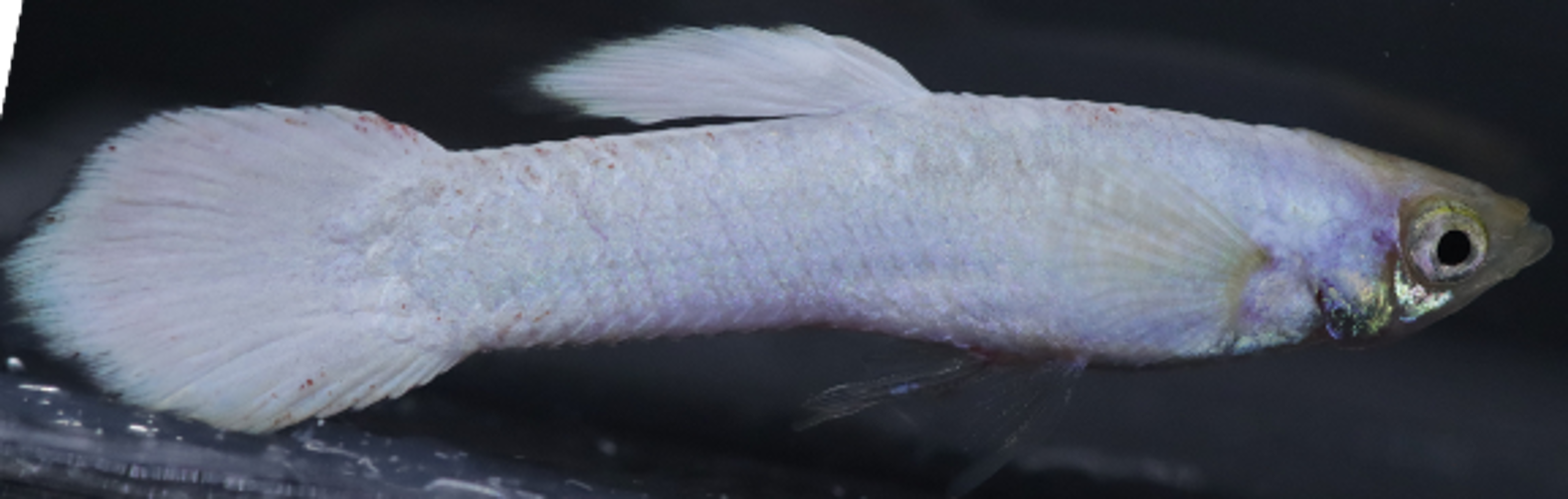
C11AM
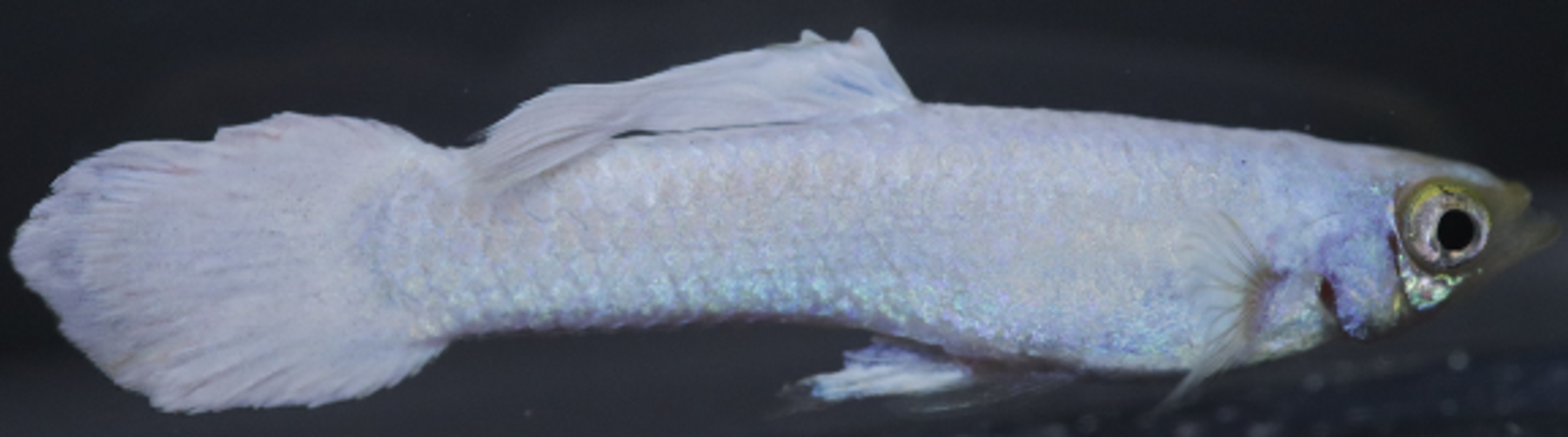
C11BM
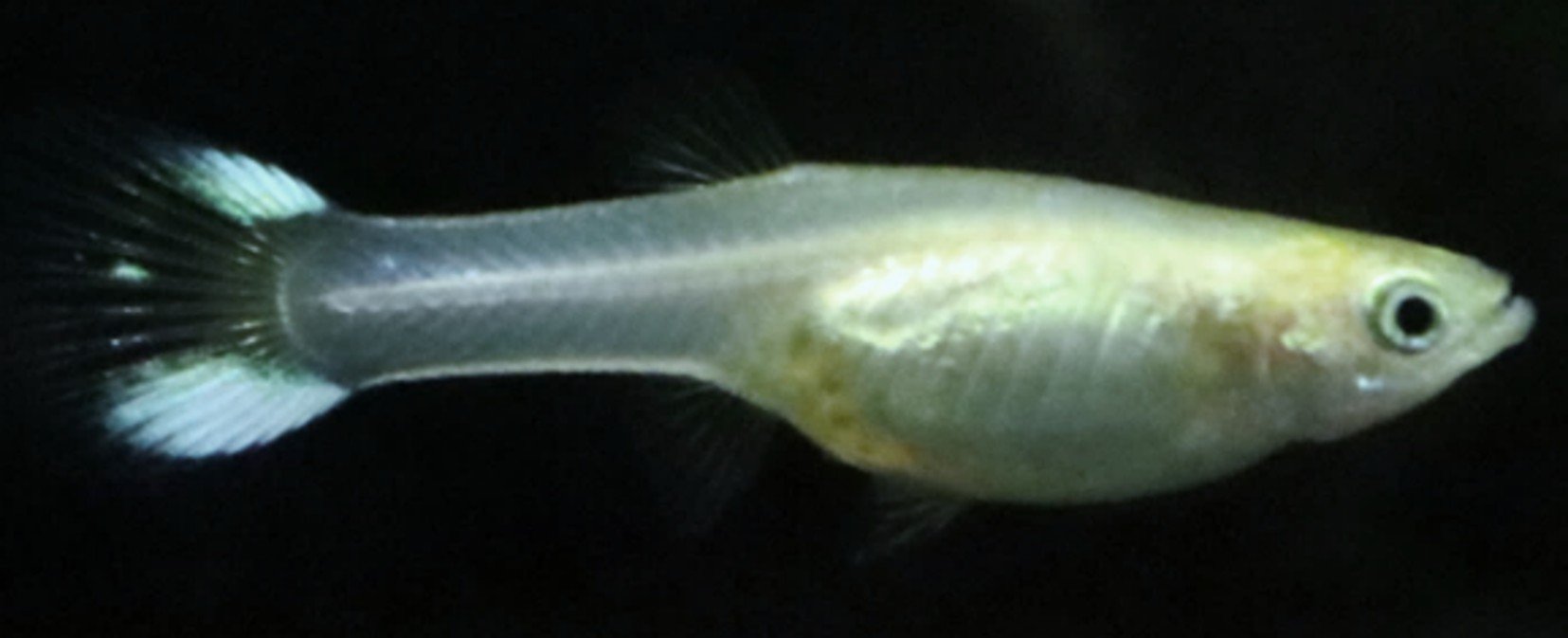
C11AF
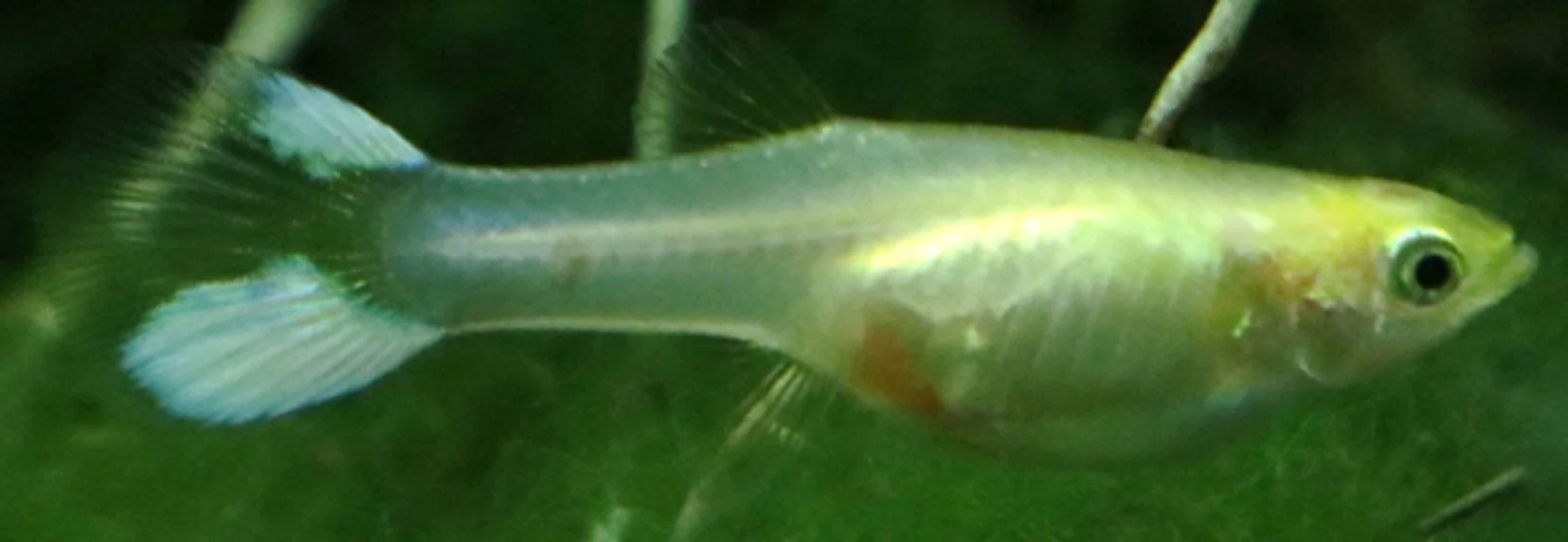
C11BF
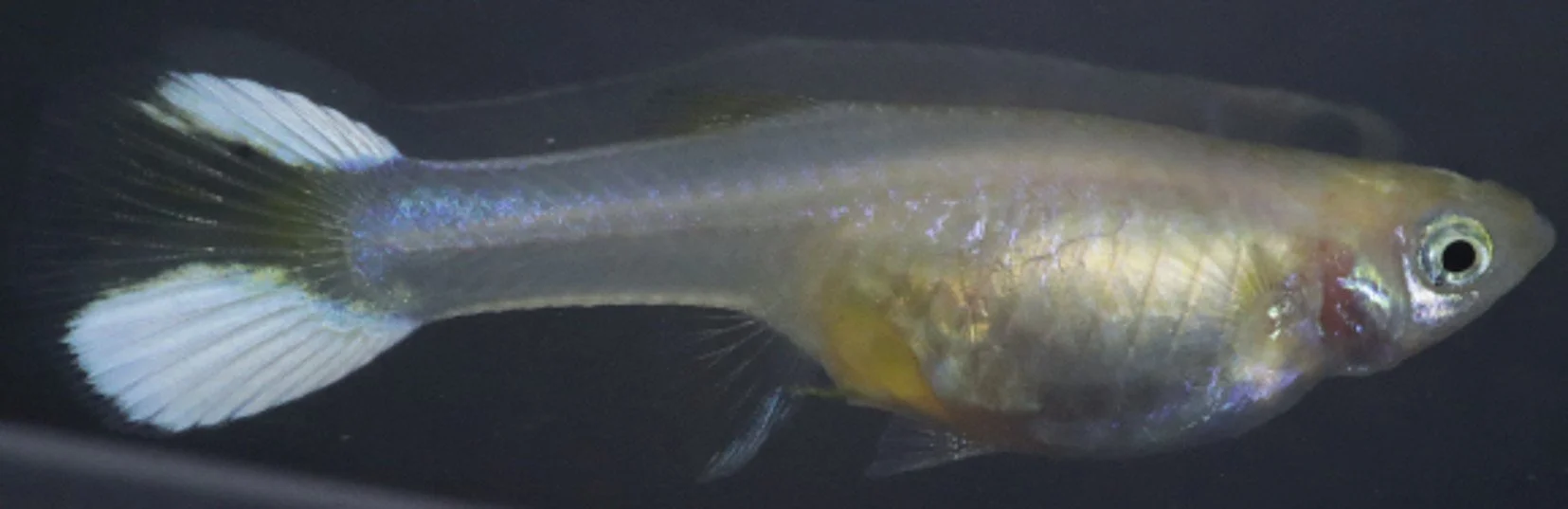
C11CF